Learn only the essential vocabulary
Understand “microbiome,” sample type, composition, relative abundance and diversity well enough to read a product page and report.

If this is your first microbiome test, the useful starting point is not a long definition. It is knowing the sequence: choose the right sample and test, prepare properly, collect it as instructed, understand what the laboratory can report, and read the result without turning it into a diagnosis.
This Canadian beginner guide follows that sequence from first research to next steps, with clear limits on what consumer microbiome information can and cannot tell you.
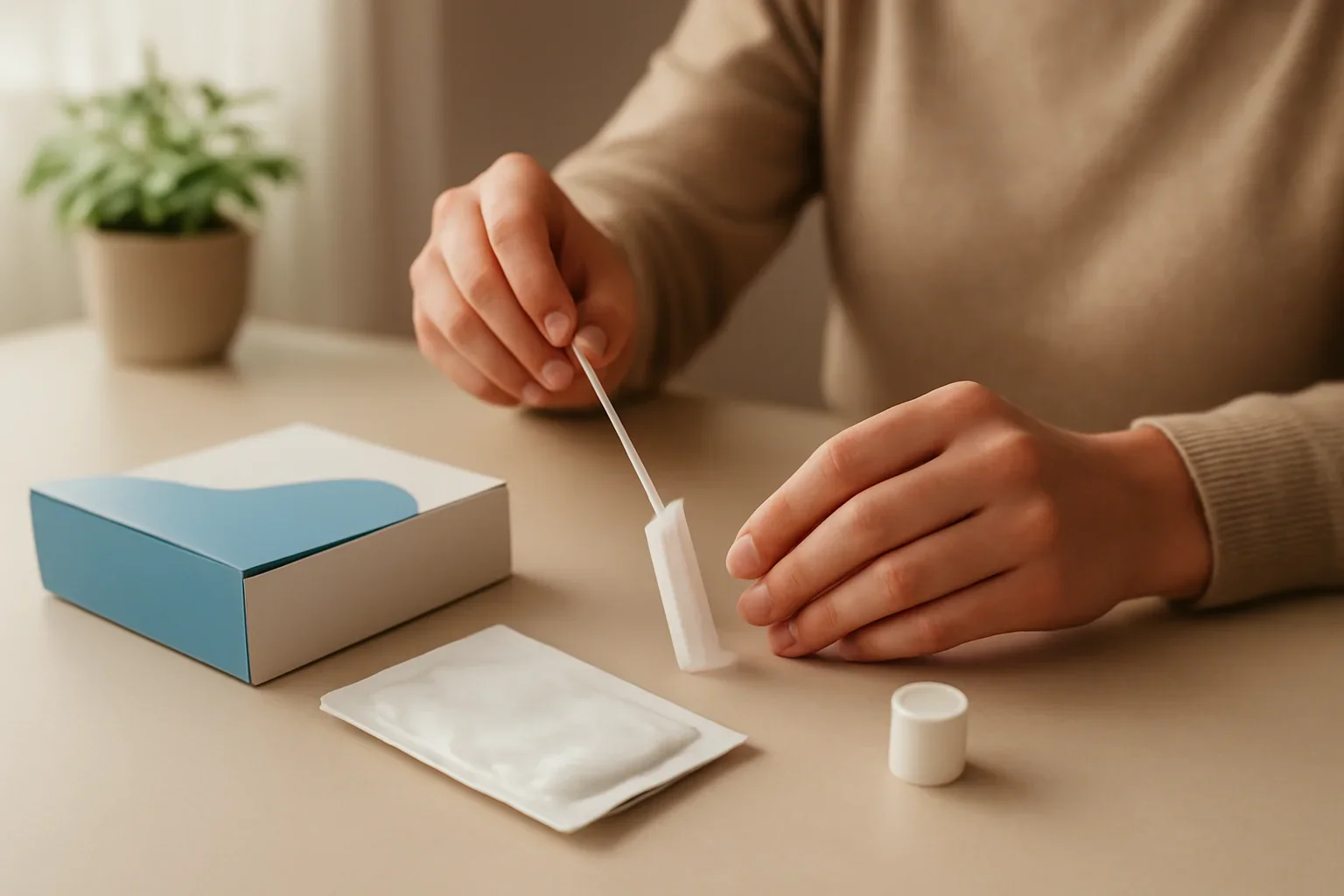
Use this page in order. Each step answers a different beginner question and reduces the chance of buying a test before you understand the sample, process, report and limitations.
Understand “microbiome,” sample type, composition, relative abundance and diversity well enough to read a product page and report.
Do not assume every microbiome test studies the same body site or requires the same type of sample.
Read the kit-specific instructions before collecting anything so you know the timing, handling and return requirements.
Different analytical methods and workflows can produce different types of microbiome information, so method matters.
Look at definitions, reported patterns and limitations together instead of searching for one “good” or “bad” score.
Separate educational follow-up from medical questions. Symptoms, diagnosis and treatment require appropriate clinical assessment.

A beginner does not need a complete microbiology lesson. You mainly need to know that a microbiome is a community of microorganisms associated with a body site, and a consumer test analyzes a submitted sample to report information about that sample.
Terms such as composition, relative abundance and diversity describe different aspects of the microbial community. They are not interchangeable with a medical diagnosis or a universal “gut health score.”
If you want the fuller background before continuing, read what is a microbiome test. This page deliberately moves on to the beginner workflow rather than repeating that definition in depth.
Beginner rule: learn what the report measures before worrying about whether a number looks high, low, good or bad.
A test should match the microbiome you want to explore and the sample you are willing and able to collect. The table below is an orientation tool, not a claim that every provider uses the same method or report.
| Beginner question | What to check | Why it matters |
|---|---|---|
| Which microbiome am I exploring? | Gut, oral, vaginal or another clearly stated body site. | Different body sites contain different microbial communities and use different collection approaches. |
| What sample is required? | Confirm the exact specimen and collection method before ordering. | The laboratory can only analyze the sample that is actually submitted and accepted for processing. |
| What will the report contain? | Look for the stated organisms, composition, diversity or other report elements. | A test may be technically legitimate yet still not provide the information you expected. |
| What is the test not designed to do? | Read the medical and interpretive limitations before checkout. | Consumer microbiome reporting should not be confused with diagnostic testing for symptoms or disease. |
If your interest is specifically stool-based gut testing, use the gut microbiome test in Canada page for product-specific Canadian details rather than treating this educational guide as a sales page.
Sample handling can affect microbiome measurements, which is why beginner guidance should emphasize the instructions supplied with the specific kit rather than inventing one universal collection protocol. Research has repeatedly shown that storage and processing choices can influence stool microbiome profiles.2
Know whether the kit specifies timing, recent medications, food-related instructions, collection restrictions or other preparation details. Do not stop prescribed medication unless a regulated healthcare professional tells you to.
Use the supplied materials and follow the kit-specific procedure. More sample, a different container or an improvised collection method is not necessarily better.
Know the return route before collection. Sample-return transit and laboratory processing are separate parts of the journey, and remote or rural logistics may require extra planning.
Collection devices, stabilization methods and laboratory workflows differ. For the site-specific sequence, review how microbiome testing works.
Microbiome testing is not one standardized test performed identically everywhere. An international expert consensus published in 2025 highlighted the need for clearer standards around pre-testing protocols, analytical methods, reporting and clinical interpretation.1
For the site’s explanation of methods and interpretive limits, review the microbiome testing science page.
A laboratory can use a legitimate analytical workflow while the resulting report still has important interpretive limits. Beginners should separate three questions: whether the sample was analyzed, what the method can measure, and what conclusions the evidence supports.
This matters because current expert consensus describes broad clinical usefulness of direct-to-consumer microbiome testing as limited and calls for stronger standardization and validation before microbiome findings are used as clinical diagnostics.1
A beginner-friendly report should make the terminology and limitations easier to understand. Your goal is to identify what was measured, how it is presented, and what the report does not establish.
Start with the organisms, groups or other findings the report says were identified within the analyzed sample.
Look for composition, relative abundance, diversity or other reported metrics, and read the provider’s definition of each one.
Check what the report cannot diagnose, what comparisons are being made and where interpretation becomes uncertain.
For a more detailed reading sequence, use the microbiome test results guide.
The most important beginner skill is knowing when a microbiome result has reached the limit of what it can responsibly answer.
These points are not added as generic disclaimers. They reflect recurring themes in microbiome research and recent expert recommendations.
International experts report scarce evidence for broad clinical usefulness of many commercial microbiome diagnostic tests and call for standardized practices.
A Canadian UBC Okanagan study found that stool preparation, handling and storage can alter downstream DNA-based bacterial community analyses.
Research reviews continue to identify sample collection, preservation, processing and extraction as important sources of technical variation.
Direct answers to the questions that commonly appear after someone understands the basic testing journey.
Start with five things: which body site the test examines, what sample you must collect, how the sample is returned, what the report contains, and what the test cannot diagnose. This gives you enough context to compare tests without needing advanced microbiology knowledge or relying on broad “gut health” marketing language.
No. A consumer gut microbiome test is designed to report microbiome-related information from a submitted stool sample. Medical stool testing may be ordered for specific clinical questions, pathogens, inflammation or other diagnostic purposes. The tests can involve the same general specimen type while answering very different questions and using different methods.
Follow the kit-specific instructions closely. Research shows that stool sampling, handling, storage and processing choices can influence measured microbial profiles. Do not substitute a generic protocol from another test. Know the collection and return steps before you begin, and contact the provider if the supplied instructions are unclear.
First identify what the report says was measured. Then read how it defines composition, relative abundance, diversity or other metrics before interpreting any number. Finally, read the limitations. A result becomes much easier to understand when you know the method’s scope and avoid treating one score as a diagnosis.
A single consumer microbiome result is an informational snapshot and should not automatically trigger a restrictive diet, supplement program, medication change or treatment plan. If a change could affect your health, interact with medication, worsen symptoms or restrict important foods, discuss the decision with an appropriate regulated healthcare professional.
Consumer testing is not enough when your question is diagnostic or treatment-related. Persistent, severe, worsening or otherwise concerning symptoms need appropriate clinical assessment. A regulated healthcare professional can decide whether your situation calls for examination, medical stool testing, blood work, imaging or another evidence-based diagnostic pathway.