Sample Collection
The biological material entering the workflow starts with the specimen collected and returned by the customer.

Microbiome science can measure and compare microbial information recovered from biological samples. The harder question is what those measurements mean for one person—and where a consumer test should stop short of medical interpretation.
This page separates what MicrobiomeTest.ca currently documents about its gut testing process from broader microbiome research, common laboratory methods and evidence that should not be turned into unsupported product claims.
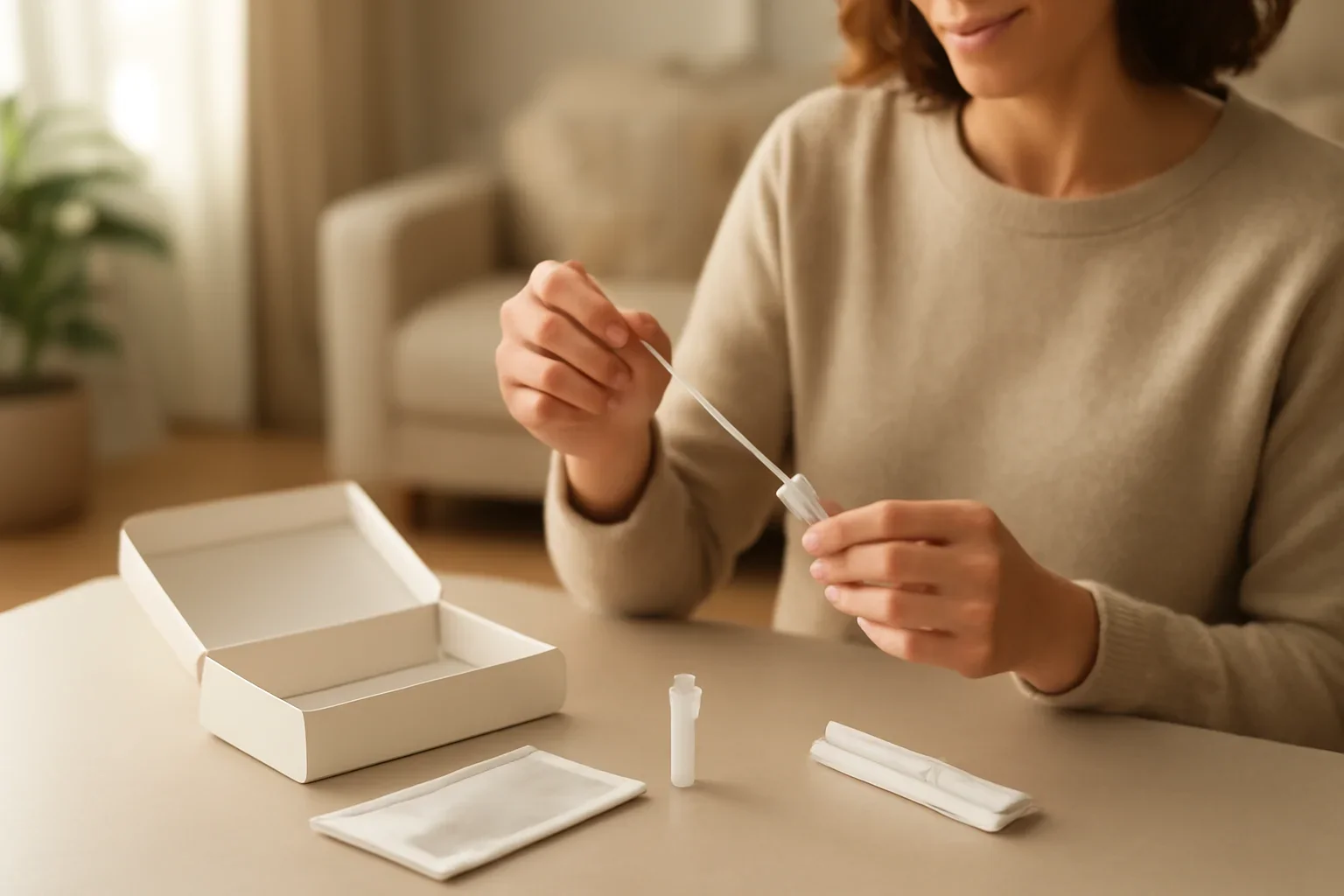
Yes, microbiome measurement is an established field of research. That does not mean every consumer interpretation has established clinical validity.
DNA-based and sequencing-based methods are widely used in microbiome research to characterize microbial information recovered from biological samples and compare community composition.
These measurements support research into microbiome composition, diversity and variation between samples. They do not automatically establish why one person has a symptom or which treatment that person needs.
International expert consensus identifies continuing challenges involving standardization, analytical methods, reporting, reference values and evidence for routine clinical use.
A scientifically measurable difference is not automatically a medically actionable result.
Scientific trust starts by separating facts documented for the current service from details that are common in microbiome research but have not been publicly confirmed for this particular test.
| Technical Detail | Status | What Can Be Said Responsibly |
|---|---|---|
| Sample type | Publicly confirmed | The current gut test uses a stool sample collected with the supplied kit materials. |
| Target material | Publicly confirmed | Current process information describes laboratory analysis of bacterial DNA found in the submitted stool sample. |
| Reported analytical output | Publicly confirmed | Current documentation describes estimates of bacterial composition and relative abundance within the applicable testing workflow. |
| Data processing and quality review | Publicly confirmed | The current process page states that data processing and quality review occur before the report is issued. |
| 16S rRNA sequencing | Not publicly confirmed | Do not state that the current product uses 16S sequencing unless laboratory or provider documentation explicitly confirms it. |
| Shotgun metagenomic sequencing | Not publicly confirmed | Do not state that the current product uses shotgun metagenomics unless current technical documentation confirms it. |
| Sequencing platform and extraction protocol | Not publicly confirmed | The public pages reviewed do not provide enough detail to name a platform, extraction kit, targeted region or library protocol. |
| Laboratory accreditation | Do not infer | No accreditation claim should appear here unless the laboratory and exact applicable accreditation can be verified. |
Why this matters: technical transparency is stronger than filling gaps with assumptions. For the operational order, collection, return and laboratory stages, see how at-home microbiome testing works.
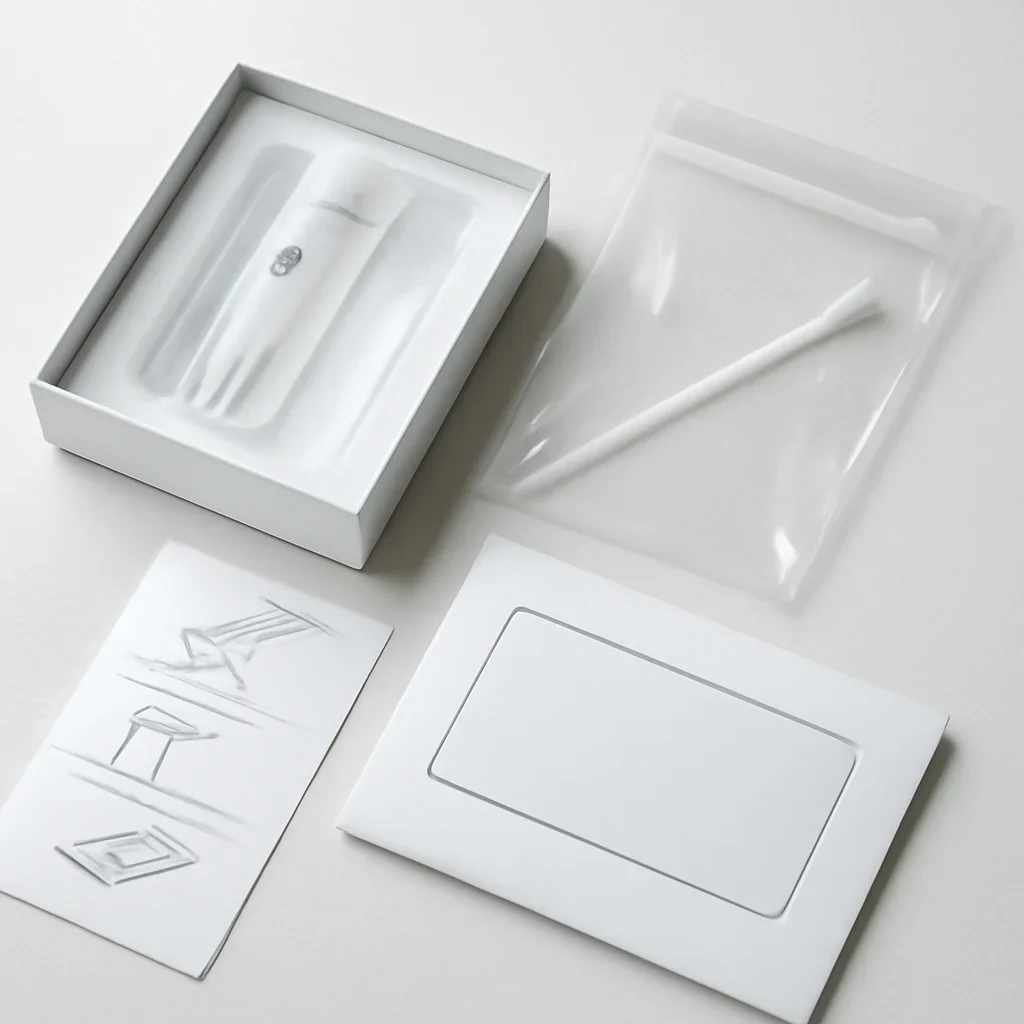
The current public testing information describes analysis of bacterial DNA recovered from a submitted stool specimen.
That distinction matters because a stool-based bacterial analysis should not be described as a complete inventory of every bacterium, fungus, virus, archaeon or other microorganism throughout the entire gastrointestinal tract.
The report represents findings produced from the submitted sample within the scope of the applicable laboratory and analytical workflow.
Careful wording: “detected in the submitted sample” is scientifically more defensible than claiming that a test maps everything living throughout a person's gut.
A microbiome report is produced through multiple technical stages. Different decisions at these stages can influence which organisms are detected and how the final data are presented.
The biological material entering the workflow starts with the specimen collected and returned by the customer.
Laboratory procedures recover microbial genetic material that can be used for downstream analysis.
The laboratory method determines which microbial information can be measured within the scope of the test.
Generated data are processed and compared using analytical rules, reference information and computational methods.
Processed findings are converted into report categories, descriptions, visual summaries and educational interpretation.
These are common microbiome research approaches. They are explained here to help readers understand methodology—not to claim that the current MicrobiomeTest.ca product uses either method.
16S sequencing targets regions of a marker gene used extensively for bacterial and archaeal community profiling.
Shotgun metagenomics sequences DNA more broadly from material recovered from a microbial community rather than targeting one bacterial marker gene.
Product-claim rule: do not label the current test “16S,” “shotgun,” “whole genome” or another specific sequencing technology unless current provider or laboratory documentation confirms that exact methodology.
Quality control is not one badge or one final check. Reliable microbiome measurement depends on controlling variability across the analytical workflow.
The current MicrobiomeTest.ca process publicly states that data processing and quality review occur before report release. However, the public pages reviewed do not provide enough detail to name the laboratory's specific positive controls, negative controls, reference materials, replicate criteria or acceptance thresholds.
Therefore: this page should say that quality review is part of the stated process, while avoiding invented descriptions of the laboratory's internal quality-control system.
Collection, storage, transport and sample condition can influence the material that enters laboratory analysis.
Extraction procedures can recover microbial DNA differently and contribute to measurement variation.
Sequencing or other DNA-analysis choices affect which signals can be detected and at what resolution.
Databases, classification rules and software pipelines can influence how generated data are assigned and reported.
The current service states that data processing and quality review occur before the microbiome report is issued.
Report metrics describe features of an analyzed microbial community. They should not be converted into universal clinical scores unless that interpretation has been appropriately validated.
Relative abundance describes how much measured microbial signal is assigned to one reported group compared with other groups in the same sample.
Richness generally describes the number or variety of distinct microbial groups detected within the limits of the analytical method.
Evenness describes how measured abundance is distributed across microbial groups rather than simply counting how many groups appear.
Alpha diversity summarizes diversity within one sample using a mathematical measure that may incorporate richness, evenness or both.
To move from the scientific terms into responsible personal-report interpretation, understand microbiome test results in the dedicated interpretation guide.
Laboratory measurement and report interpretation are related but different layers. Raw or processed microbial measurements must be organized, summarized and explained before they become a consumer-facing report.
The laboratory and analytical workflow produces information about bacterial signals represented in the submitted sample.
Findings may then be organized into composition, abundance, diversity or other report sections according to the reporting system.
Explanations can help make technical information easier to read, but they should remain clear about uncertainty and non-diagnostic use.
Independent analytical-performance research is useful because it tests whether differences between commercial services are only theoretical or can materially affect reported microbiome profiles.
Researchers evaluated seven direct-to-consumer gut microbiome testing services using standardized human fecal material.
The study reported substantial discrepancies within and between providers and attributed important differences to methodological variation and insufficient quality control.
Standardized material helps researchers separate differences caused by laboratory and analytical workflows from genuine biological differences between people.
Collection, extraction, library preparation, sequencing and bioinformatics can each contribute to differences in the organisms ultimately reported.
A health interpretation cannot be stronger than the reliability and reproducibility of the measurement used to produce it.
A trustworthy science page should make the boundary between measurable microbial information and unsupported clinical conclusions impossible to miss.
If your question involves persistent, worsening or otherwise concerning symptoms, diagnosis, prescribed medication or treatment, discuss it with an appropriately regulated healthcare professional rather than relying on a consumer microbiome report alone.
Canadians evaluating an at-home microbiome service should consider more than the laboratory concept itself. Biological samples, personal information, report access, return logistics and medical limitations are also part of responsible testing.
This page does not claim Canadian laboratory ownership, local laboratory facilities, accreditation or practitioner involvement unless those details can be independently verified.
Product-specific methodology should be stated explicitly rather than inferred from terminology used by other microbiome companies.
Understand what personal and testing information is requested and how privacy questions are addressed before submitting a sample.
Microbiome Testing Privacy and Data arrow_forwardA consumer wellness report and diagnostic testing selected by a regulated healthcare professional serve different purposes.
Product-specific statements are kept separate from general scientific evidence. Technical claims should be revised whenever the provider or laboratory publishes newer methodology or validation documentation.
Expert consensus covering pre-testing, analytical methods, reporting standards, clinical value, standardization and current knowledge gaps.
View PubMed RecordNIST-led research evaluating multiple consumer microbiome services with standardized human fecal material and examining analytical variability.
View NIST PublicationPublished evaluation showing why methodological variation, reproducibility and quality control matter when comparing consumer microbiome services.
View ResearchU.S. National Institutes of Health scientific resource describing the microbiome and its microbial components.
View NIEHS ResourceDirect answers about methodology, analytical quality, interpretation and what the current service does or does not publicly document.
Microbiome measurement using DNA- and sequencing-based methods is widely established in scientific research. The larger limitation is how consumer findings are interpreted clinically. Current international consensus identifies continuing needs for method standardization, validated reference frameworks and stronger evidence before microbiome testing can be used broadly as a routine clinical diagnostic tool.
Current public process information states that bacterial DNA found in the submitted stool sample is analyzed to estimate bacterial composition and relative abundance. The public pages reviewed do not justify claiming that the test measures every microorganism throughout the digestive tract or that it provides a complete clinical assessment of gut health.
The current public pages reviewed describe bacterial DNA analysis but do not clearly identify the exact sequencing approach as 16S rRNA gene sequencing or shotgun metagenomics. Both are established microbiome research methods, but this page should not assign either method to the current product until provider or laboratory documentation explicitly confirms it.
Analytical quality can be influenced by sample handling, DNA extraction, sequencing or detection methods, reference data, bioinformatics and report-generation rules. The current service states that data processing and quality review occur before report release, but its public pages do not provide enough detail to name specific laboratory controls or acceptance thresholds.
Results can differ because the biological sample itself can vary and because laboratories may use different collection methods, DNA-extraction procedures, sequencing approaches, sequencing depth, databases, bioinformatics and reporting rules. Independent analytical research has demonstrated meaningful variation among consumer testing services, so two reports should not automatically be expected to match.
No. Diversity describes features of a microbial community, and different diversity metrics emphasize different characteristics. Higher diversity is associated with favourable states in some research contexts, but diversity alone does not define whether one person is healthy. Interpretation depends on the body site, microbial community, analytical method and wider clinical context.
Research has identified associations between microbiome patterns and many health conditions, but association does not prove causation or create a diagnosis for an individual. A consumer microbiome report should not be used alone to diagnose or rule out IBS, IBD or another condition. Medical concerns belong with an appropriately regulated healthcare professional.
A trustworthy microbiome test should make its sample, reported measurements, scientific limits and data-handling expectations clear before you submit a biological sample or pay for testing.