Use traceable sources
Scientific claims should be tied to peer-reviewed research, consensus statements or authoritative Canadian guidance where relevant.

MicrobiomeTest.ca is a Canadian-facing information and ordering website for people evaluating at-home microbiome testing. The site is designed to connect product information with collection guidance, report education, scientific limitations, privacy information and Canadian logistics before a visitor decides what to do next.
This About page is also where trust boundaries belong. We do not present undocumented credentials, laboratory ownership, accreditation, clinical outcomes, years of experience or customer statistics as fact. When a claim requires proof, it should be published only after that proof is documented and current.

MicrobiomeTest.ca is a Canadian information and ordering resource for at-home microbiome testing. The current site provides product pages, sample-collection information, educational microbiome content, report guidance, privacy information and customer-support pathways.
Consumer microbiome testing on the site is presented as educational rather than diagnostic. Visitors with medical symptoms, treatment questions or a need for diagnosis should use an appropriate regulated healthcare professional rather than treating a consumer report as a substitute for clinical assessment.
An About page should not create authority by adding impressive-sounding details that have not been documented. The table below shows the standard this page follows.
| Trust area | What can be stated now | What should only be published with documentation |
|---|---|---|
| Organization | The site is a Canadian-facing information and ordering resource for at-home microbiome testing. | Corporate history, founding date, team size, years in operation or physical-office claims that are not documented. |
| Contributors | Pages can use named author and reviewer fields once identities and roles are verified. | Professional credentials, licences, specialties, affiliations or clinical experience without current supporting evidence. |
| Laboratory relationship | Returned samples are sent for laboratory processing after intake and acceptance, according to the current testing workflow. | Laboratory ownership, partner identity, accreditation, certification, assay validation or geographic location unless current documentation supports the specific claim. |
| Results | Reports are positioned as educational information about the analyzed sample and may include microbiome-related findings within the selected test's scope. | Diagnostic accuracy, treatment outcomes, disease detection, guaranteed health improvement or individualized clinical claims without appropriate validation. |
| Customer proof | Support, product, shipping and report information can be evaluated through published site pages. | Review counts, satisfaction rates, customer totals, success rates or testimonial claims until the underlying proof is approved and traceable. |
Health-related content earns trust when readers can tell who wrote it, who reviewed it, when it was checked and which sources support the statements. The site should therefore use named contributor information only after identity, role and credentials have been verified.
Until that documentation is available, placeholders such as [Author Name, Role] and [Reviewer Name, Relevant Credentials] are more responsible than invented biographies or implied clinical authority.
Publication rule: a credential should be specific enough to verify. Titles such as physician, registered dietitian, microbiologist, laboratory director or other regulated/professional roles should never be inserted from assumption.
The editorial standard is designed to make limitations visible, separate product facts from emerging research and keep medical claims proportional to the evidence.
Scientific claims should be tied to peer-reviewed research, consensus statements or authoritative Canadian guidance where relevant.
A research association should not be rewritten as proof that one microorganism caused a symptom or condition in an individual.
Prices, shipping, collection instructions, report contents and processing details should be checked against the current service before publication or revision.
Pages should show a review date when scientific evidence, operational details or regulatory context may change over time.
The current testing workflow states that a returned sample goes through laboratory intake, acceptance and processing before report access. That is different from claiming that MicrobiomeTest.ca owns a laboratory or that a particular laboratory accreditation applies.
To understand the verified customer journey without adding laboratory assumptions, see how at-home microbiome testing works.
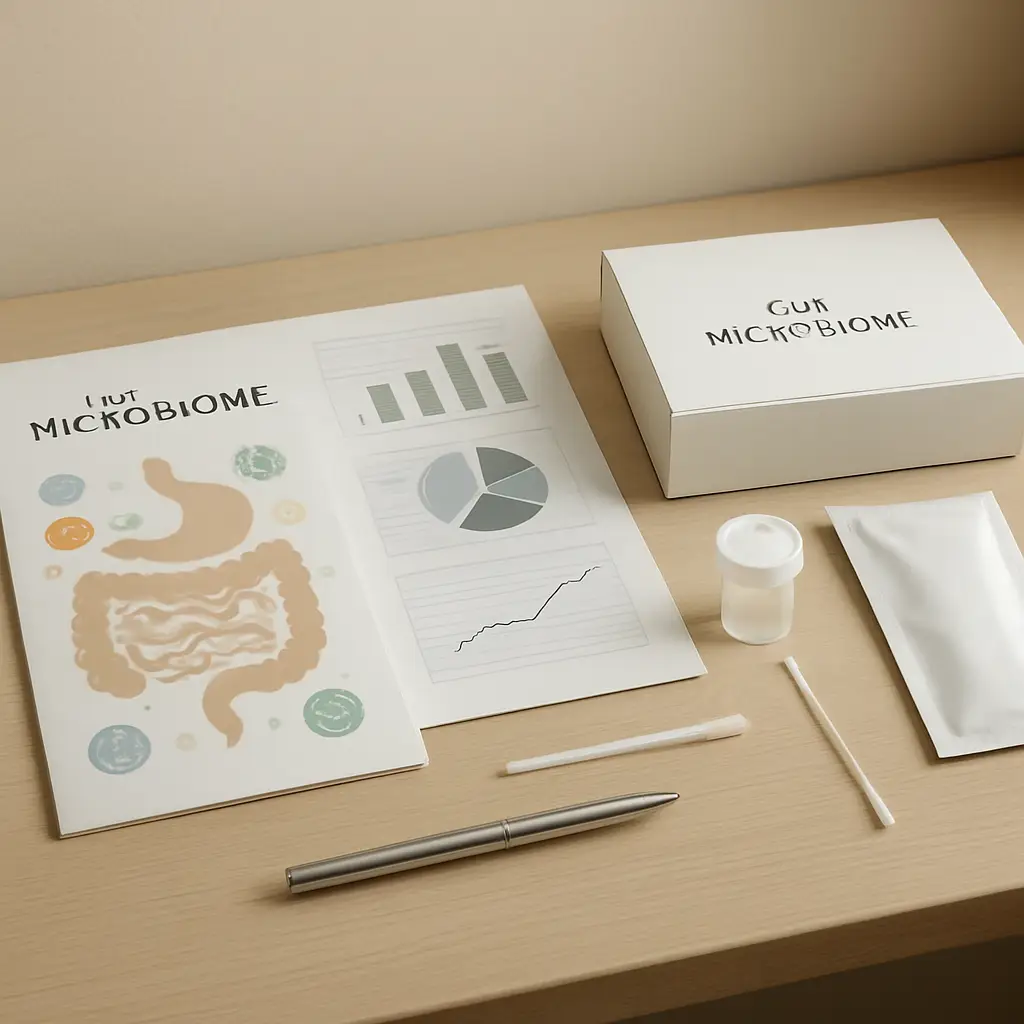
A microbiome test is easier to evaluate when visitors can see the type of information they may receive instead of relying on broad marketing language. The site therefore separates the report preview from interpretation guidance.
Visitors can view a sample microbiome report before purchase and use the dedicated guide to understand microbiome test results with appropriate context.
A sample report does not guarantee that every future report will contain identical findings or prove that an individual has a disease. Its value is transparency around structure, terminology, educational depth and stated limitations.

A microbiome order can involve identifying information, biological samples and report data. Visitors should be able to understand what information is requested, why it is needed, how it is handled and where privacy questions can be directed before submitting an order or sample.
Canada's federal privacy guidance emphasizes accountability, identifying purposes, consent, limiting collection and use, safeguards, openness and individual access among its fair-information principles. The law that applies can depend on the organization and jurisdiction, so this page does not make an unsupported claim about a specific legal regime applying to every data flow.
For the site's current disclosures, review microbiome testing privacy and data.
A person's province or city does not create different microbiome science. Canadian relevance is mainly about the customer journey: whether the address is supported, how a kit is delivered, how a sample is returned, and how weather, holidays, carrier schedules or remote transportation may affect parcel movement.
We avoid presenting city pages as if local postal codes change the biological interpretation of a microbiome result. The evidence standard and non-diagnostic limitations remain the same.
Visitors comparing the actual gut product can review the gut microbiome test in Canada page for current product-specific information.
Delivery: current availability should be checked for the exact address rather than assumed from a city or province name.
Return: follow the selected kit's packaging and return instructions, including any specified carrier or timing requirements.
Timing: shipping stages are separate from laboratory intake and processing, so one broad turnaround claim can be misleading.
The site should remain explicit that consumer microbiome testing is educational and does not replace clinical diagnosis, physician-ordered testing or individualized treatment.
This About page is not designed to push everyone to checkout. If the testing scope and limitations are already clear and you are ready to choose an available kit, you can order a microbiome test. Otherwise, remain in the educational and reporting pages until your questions are answered.
This page uses the site's current operational and medical-limit language together with independent guidance on microbiome testing and Canadian privacy principles. Laboratory ownership, accreditation and named contributor credentials are deliberately excluded until documentation supports them.
Direct answers about the organization, editorial review, laboratory transparency, privacy and medical limits.
MicrobiomeTest.ca is a Canadian-facing information and ordering website for people evaluating at-home microbiome testing. It connects product information with collection guidance, report education, scientific limitations, privacy information and support pathways. The site presents consumer microbiome reports as educational information rather than a substitute for medical diagnosis or individualized treatment.
Pages should identify authors and reviewers only when their names, roles and credentials have been verified for publication. Where that documentation is not yet available, the site should use explicit placeholders rather than invent qualifications. Review dates and cited sources help readers see when health-related or operational information was last checked.
The current public workflow confirms laboratory processing after returned samples are received and accepted, but this About page does not claim laboratory ownership. A laboratory partner name, ownership statement, accreditation or certification should be published only when current documentation supports the exact relationship and applicable scope.
Consumer microbiome information is presented as educational and non-diagnostic. A report should not be used to diagnose IBS, IBD, infection, food intolerance or another condition, prove that one microorganism caused a symptom, or replace physician-ordered testing. Persistent, severe or worsening symptoms belong with an appropriate regulated healthcare professional.
Privacy information should explain what personal or biological information is requested, why it is needed, how it is handled and where questions can be directed. Canadian privacy requirements can depend on jurisdiction and organizational circumstances, so the site should publish concrete practices rather than make a broad unsupported legal-compliance claim.
Canadian relevance is mainly practical: ordering eligibility, parcel delivery, at-home collection, sample-return instructions, holidays, weather and urban, rural or remote carrier routes. A Canadian city or province does not change the scientific limitations of a consumer microbiome result, so location content should focus on logistics rather than inventing local biology.