Re-read the collection page
Confirm sample amount, collection method, labels, storage instructions and what needs to happen immediately after collection.

The safest preparation rule is simple: read the instructions for your exact kit before collecting anything. Confirm the required sample, collection method, any stated diet or medication guidance, storage instructions, labels or registration steps, and the return process.
Do not invent a special “microbiome diet,” stop prescribed medicine, freeze a sample, or copy instructions from another kit unless your own test specifically tells you to do so. Collection and preservation methods can affect the microbial profile measured in stool.1
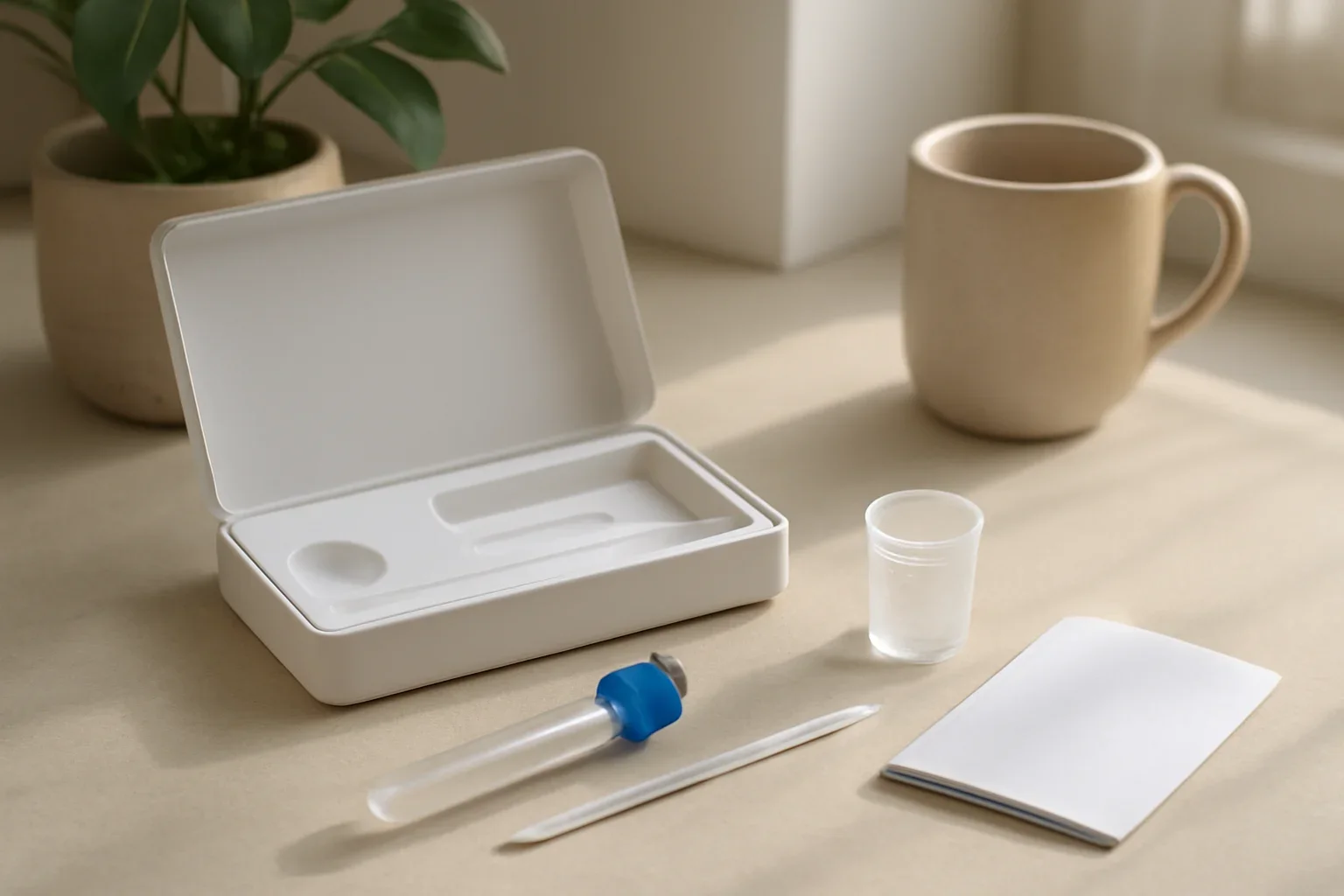
Prepare the process before you prepare the sample. Read the full kit instructions, check every component, complete any required registration or identification step, confirm the sample-return route, and understand any test-specific guidance about timing, diet, supplements or medicines.
Microbiome testing is not standardized enough for one universal preparation checklist to replace the instructions supplied with the kit. Recent reviews and expert consensus identify collection, preservation, storage and other pre-analytical factors as important sources of variability.2
If you are still learning the basics of the test itself, read what is a microbiome test before focusing on collection details.
The exact instructions vary by kit, but this timeline separates the questions to solve before, during and immediately after collection without inventing universal medical or storage rules.
| Stage | What to check | Why it matters | Do not assume |
|---|---|---|---|
| When the kit arrives | Read the instructions, inspect the container and sampling materials, and complete any registration or identification step. | Missing or damaged components are easier to resolve before a specimen exists. | That instructions from another microbiome kit apply to yours. |
| Before collection day | Review any stated diet, medicine, supplement, timing, storage and return requirements. | Recent exposures can be relevant to microbiome interpretation, while test-specific protocols may differ. | That you should stop prescribed treatment or alter your diet without explicit guidance. |
| During collection | Use only the required materials, collect the requested amount, avoid contamination and label the container exactly as directed. | Collection quality and sample integrity can affect whether the specimen is usable and what profile is measured. | That more sample, another container or a different collection technique is better. |
| Immediately after | Seal, store, package and return the specimen according to the kit instructions. | Time, temperature and preservation methods can change measured microbial communities. | That refrigeration, freezing or room-temperature storage is universally correct. |

Do not deliberately overhaul your diet simply to make a report look “healthier.” Diet can influence the gut microbiome, so a sudden short-term change may make the sample less representative of your usual recent pattern rather than more informative.
If the kit gives a specific dietary instruction, follow that instruction. If it does not, avoid adding fasting, fibre loading, probiotic loading, restrictive eating or a “gut reset” purely to influence the result.
The goal is a correctly collected sample under the conditions required by the selected test—not a temporarily manipulated microbiome.
Useful context: note unusual recent changes such as travel, illness, major dietary shifts or medication exposure so you remember the circumstances around collection when reviewing the report.
Medicines, antibiotics and supplements can be relevant microbiome context, but test preparation should not override medically necessary care.
Antibiotic effects on gut microbial communities are well documented and can vary according to the drug, duration, baseline microbiome and other factors.3 This makes recent antibiotic use important context for many microbiome questions.
Follow any antibiotic-related instructions given for your exact test. Do not stop, delay or avoid a prescribed antibiotic merely to obtain a consumer microbiome sample unless the healthcare professional responsible for your treatment advises that change.
Probiotics, prebiotics, laxatives and other supplements may be relevant to some testing protocols or to later interpretation, but preparation rules vary. Do not create your own “washout period” from generic advice.
If the kit does not address something you take regularly, ask the test provider before collection. If changing it could affect your health or treatment, involve the appropriate regulated healthcare professional.
Your kit controls the exact collection method. These four checks help you follow that method without adding unnecessary steps.
Confirm sample amount, collection method, labels, storage instructions and what needs to happen immediately after collection.
Prepare the supplied container, sampling tool, labels and return packaging before you start so the specimen is not left while you search for components.
Avoid contaminating the specimen with water, urine, cleaning products or another container unless the supplied instructions explicitly require a different procedure.
Complete required identification, sealing, storage and packaging steps in the order stated by the kit before beginning the return journey.
For the broader order → receive → collect → return → laboratory → report journey, review how microbiome testing works.
Sample handling is not just a shipping detail. Research has repeatedly shown that collection, preservation, storage and processing can alter measured microbial community profiles.14
Different collection systems can use different preservation buffers, temperatures and transport strategies. A protocol that works for one research method or kit can be wrong for another.
Correct collection reduces avoidable pre-analytical problems, but it does not make consumer microbiome testing a medical diagnosis. The 2025 international consensus statement emphasizes the need for standardized pre-testing protocols, analytical methods and reporting, and notes that evidence for broad clinical usefulness of commercial diagnostic microbiome tests remains limited.2
For methodology and interpretation context, review the site's microbiome testing science.
The best collection day is one that lets you follow your kit's return instructions without unnecessary delay. Before collection, confirm the return label or address, approved carrier if specified, packaging, storage requirement and the point at which the parcel actually enters the carrier network.
Weekends, statutory holidays, rural or remote service frequency, weather disruptions and local cut-off times can affect parcel movement in Canada. Those practical realities make pre-planning more useful than collecting first and deciding how to ship afterward.
Do not assume that an order-delivery address, customer-service address and specimen-return address are the same. Use the return information supplied for your exact kit.
Destination: confirm the exact return address or prepaid label supplied for the specimen.
Carrier: follow any required shipping service or drop-off method stated by the kit.
Timing: check weekends, holidays and the local acceptance cut-off before choosing collection day.
Storage: use only the post-collection storage conditions stated in your instructions.
Most preventable problems come from improvising, rushing or applying a rule from the wrong kit.
An unclear preparation question is easier to resolve before a stool sample has been collected, labelled and packaged.
Do not rely on customer support for decisions about stopping prescribed medication, delaying antibiotics, managing significant symptoms, changing treatment or following a medically restricted diet. Those decisions belong with the appropriate regulated healthcare professional.
Careful preparation improves the collection process; it does not turn the final report into a diagnostic test.
Once an acceptable returned sample reaches the laboratory, the laboratory stage begins. The site's current process page separates return transit from laboratory processing and explains that sample acceptance comes before analysis and report preparation.
Correct collection, sealing, identification and return reduce avoidable reasons a sample may be unsuitable or require recollection.
Once results are available, use the microbiome test results guide to understand common report concepts and limitations.
If you are still deciding whether to test rather than preparing an existing kit, use the gut microbiome test in Canada page for current product-specific information.
Microbiome research repeatedly identifies collection and pre-analytical methods as important sources of technical variation. The responsible consumer message is therefore to follow the protocol designed for the selected kit rather than importing a preparation rule from a different method.
Direct answers about diet, medicines, storage, collection timing and Canadian sample return planning.
Read the full instructions for your exact kit, check that all collection materials are present, complete any required registration or identification, review diet or medication guidance, and confirm storage and return steps before collection. Do not substitute instructions from another test, because collection systems and preservation methods can differ.
Follow any dietary instructions supplied with your test. If the kit does not require a special preparation diet, avoid deliberately fasting, fibre loading, restricting foods or changing probiotics simply to create a “better” result. A sudden short-term diet change can also make the sample less representative of your usual recent routine.
There is no universal washout rule for every consumer microbiome test. Use the instructions supplied with the selected kit. If a regular probiotic, prebiotic, laxative or supplement is not addressed, ask the provider before collection. Do not make a health-related change that could affect treatment without appropriate professional advice.
Antibiotics can substantially alter gut microbial communities, so recent use can be important context for testing and interpretation. Follow the antibiotic-timing guidance for your exact test. Do not stop, delay or avoid a prescribed antibiotic merely for consumer microbiome testing; treatment decisions belong with the healthcare professional responsible for your care.
Only if your kit instructions specifically tell you to. Stool collection systems can use different preservation buffers and storage conditions, and research shows that preservation choices can affect measured microbial profiles. Do not refrigerate, freeze or leave a completed sample at room temperature based on instructions from a different test.
Choose a day that lets you follow your kit's return instructions without unnecessary delay. Before collecting, check the required carrier or return method, local acceptance cut-off, weekends, statutory holidays and any rural or remote service limitations. The right collection day depends on the storage and shipping requirements of your specific test.
No. Careful preparation helps reduce avoidable collection and handling problems, but it does not change the intended scope of a consumer microbiome report. Current expert consensus notes limited evidence for broad clinical use of commercial microbiome diagnostics. Persistent, severe or concerning symptoms should be assessed through appropriate healthcare rather than a consumer stool report alone.