Testing soon afterwards
A sample collected relatively soon after antibiotic use may reflect a microbiome that has recently been exposed to that disruption. That can be relevant if your goal is simply to document a post-antibiotic snapshot.

Testing after antibiotics can provide a microbiome snapshot from that point in time. The important question is not simply “how many days should I wait?” but what you want that snapshot to represent: the period soon after antibiotic exposure or a later point as your microbiome continues to change.
No universal waiting period: published research shows that microbiome responses and recovery after antibiotics vary by antibiotic exposure and by person. A consumer test should not promise that one fixed waiting interval reveals a fully “recovered” microbiome.
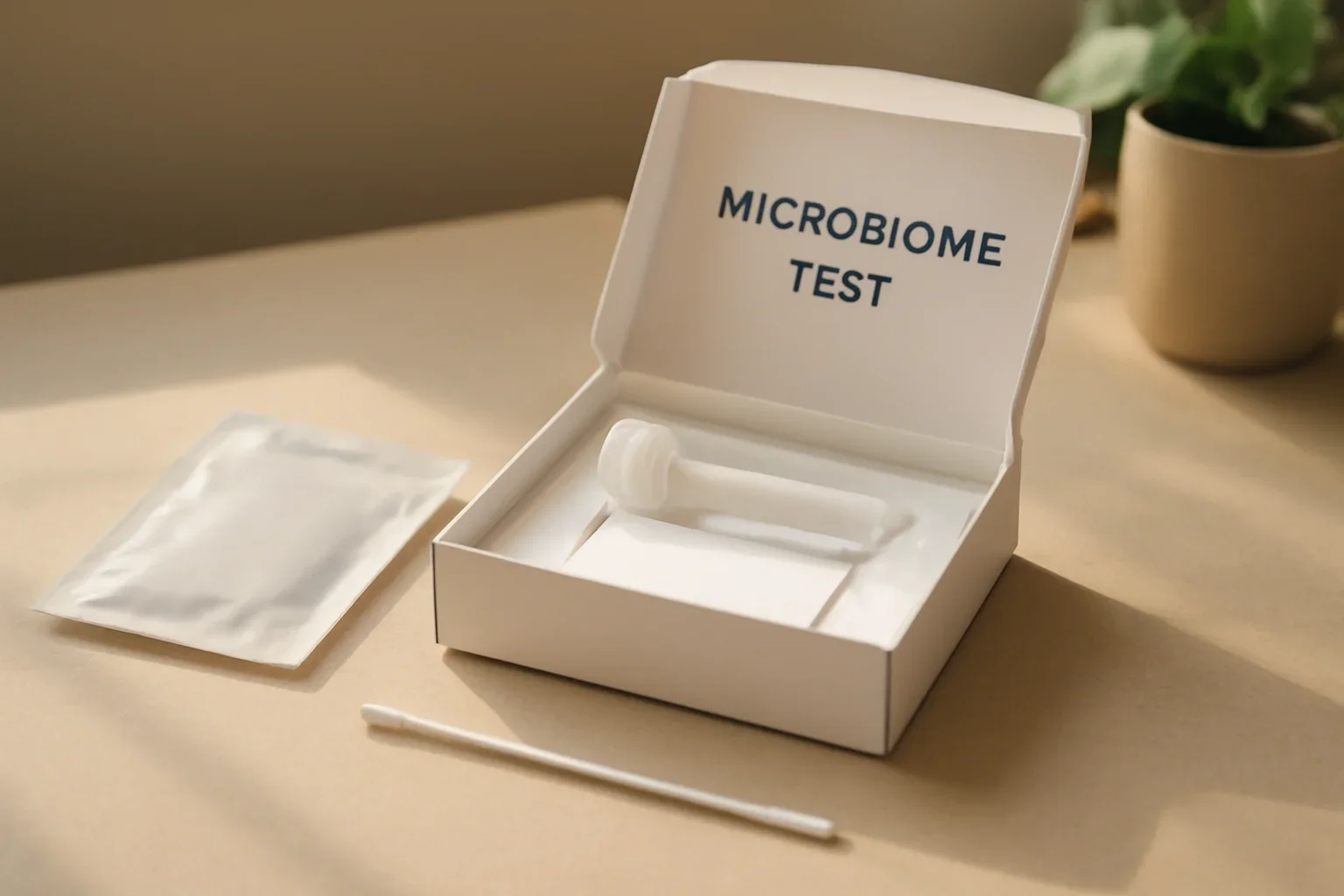
There is no single evidence-based number of days that can be recommended for everyone. Antibiotics can alter gut microbial communities, but the size of the change and the path afterwards differ between people and antibiotic exposures.
Testing sooner and testing later answer different observational questions. Neither timing proves that your microbiome has “recovered,” and a consumer report should not be used to decide whether an infection has cleared or whether medical treatment worked.
A sample collected relatively soon after antibiotic use may reflect a microbiome that has recently been exposed to that disruption. That can be relevant if your goal is simply to document a post-antibiotic snapshot.
A later sample captures the microbiome at a later stage. It should not be labelled a guaranteed “recovered” baseline because microbial changes and recovery patterns are individual and may continue over different timescales.
If your real question is why you have symptoms after antibiotics or whether you need treatment, consumer microbiome timing is not the main issue. A regulated healthcare professional is the appropriate starting point.
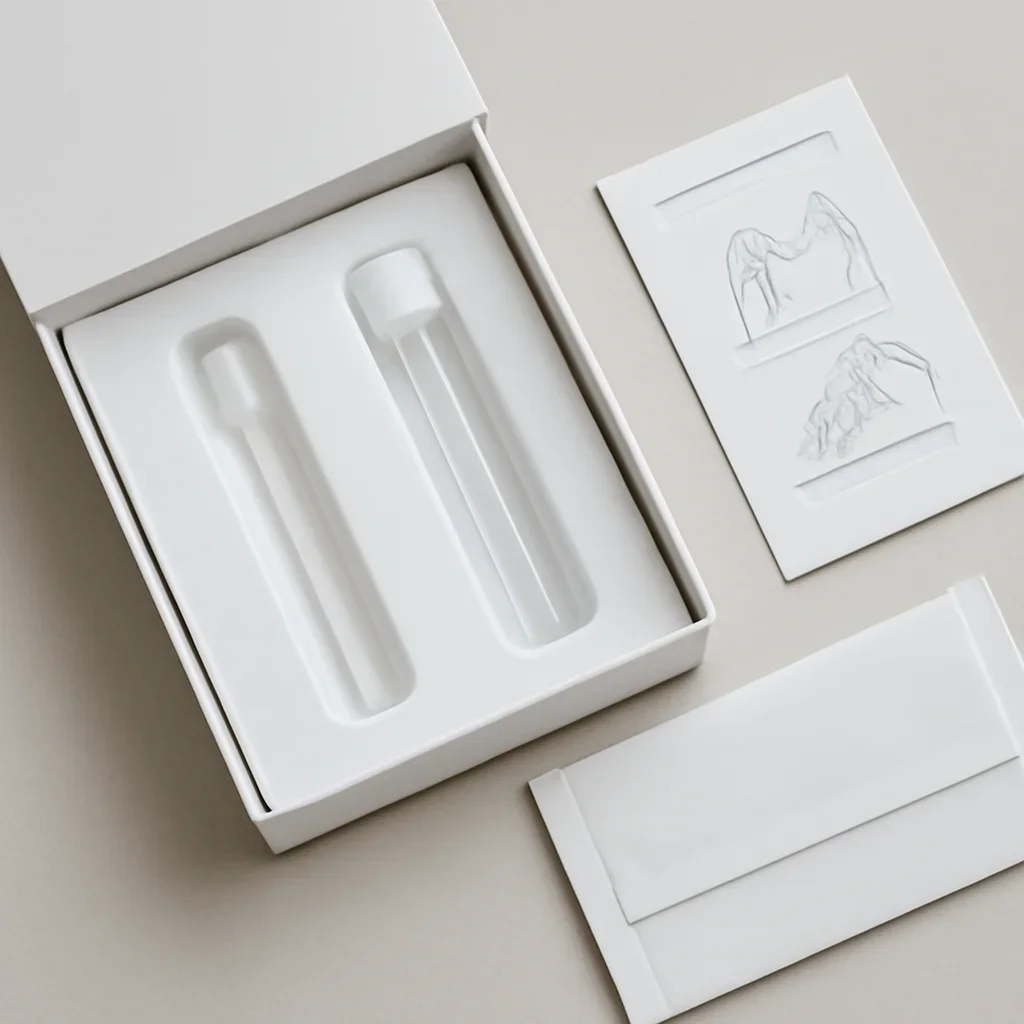
Antibiotic studies consistently show that gut microbial communities can change after exposure. They also show why a fixed consumer testing interval is difficult to justify.
Different studies use different antibiotics, participants, doses, durations, sampling schedules and laboratory methods. Individual responses can also differ within the same study.
Practical interpretation: choose the testing time according to the snapshot you want to document, while recognising that consumer microbiome testing does not provide a validated “microbiome recovery” certificate after antibiotics.
These are different use cases. Separating them before checkout helps prevent a consumer report from being asked to answer a clinical question it was not designed to answer.
| Your goal | What timing changes | What a consumer test may provide | What it cannot prove |
|---|---|---|---|
| Document the period soon after antibiotics | Collecting sooner places the sample closer in time to the antibiotic exposure. | An educational microbiome snapshot from the submitted stool sample. | Whether every change detected was caused by the antibiotic or whether treatment was medically successful. |
| See a later microbiome snapshot | Waiting means you are sampling at a later point after the exposure. | A later report that can be reviewed within the scope of the selected test. | That the microbiome is fully “recovered,” normal or medically healthy. |
| Compare two points in time | Separate samples can represent two different collection dates. | Two reports that may allow observational comparison when the same testing framework is used. | That the antibiotic alone caused every difference or that a change represents clinical improvement. |
| Explain ongoing digestive symptoms | The timing of a consumer test does not turn it into diagnostic testing. | Educational microbiome information within the report's scope. | The medical cause of diarrhoea, pain, bloating or another symptom. |
| Decide whether to change medication or treatment | Consumer microbiome timing is not an appropriate basis for this decision. | No substitute for clinical medication assessment. | Whether to start, stop, delay or change prescribed treatment. |
Do not alter prescribed antibiotics to fit a microbiome testing schedule. Questions about the medicine, treatment duration, side effects or whether treatment should change belong with the prescribing healthcare professional.
The report represents the submitted sample. Keeping basic timing and routine context with your own records can make that snapshot easier to understand later.
This does not require inventing a special post-antibiotic protocol. The instructions supplied with your individual kit should guide preparation, collection, packaging and return.
For your own reference, note approximately when the antibiotic course occurred in relation to collection. This provides context without implying that timing alone explains the report.
If your eating pattern, travel schedule or other everyday routine changed substantially around the same period, keep that information with your records rather than assuming antibiotics were the only influence.
Medication questions should be handled clinically. Do not stop, start or change prescribed medicines because of a consumer microbiome report or to produce a different microbiome result.
Write down whether your goal is an immediate post-antibiotic snapshot, a later snapshot, general education or comparison. That helps keep your interpretation aligned with what the test can actually provide.
Follow the preparation, collection, handling, labelling and return instructions supplied with the selected test. If an operational instruction is unclear, resolve it before collection rather than replacing it with generic advice from an article.
The value is in documenting and learning from the analyzed sample. The report should not be stretched into medical conclusions about antibiotic effectiveness, infection or recovery.
Your choice of collection date is only one part of the process. Delivery, sample return and laboratory processing all happen on separate parts of the timeline.
The current consumer workflow uses a stool sample collected at home with the supplied materials. Follow the individual kit instructions for preparation, handling, labelling and packaging.
The current published estimate begins after an acceptable returned sample reaches the laboratory and is accepted for processing. It is not the total time from online checkout to report.
Kit delivery to your Canadian address and sample return transit are additional parts of the timeline. Recollection, repeat analysis or operational issues may also extend the overall process.
Consumer microbiome testing is not a substitute for clinical assessment. Speak with an appropriately regulated healthcare professional if your main question involves diagnosis, treatment, medication, significant symptoms, persistent symptoms or symptoms that are getting worse.
A clinician can consider the reason the antibiotic was prescribed, your medical history, current symptoms and other relevant information. Those questions cannot be answered responsibly from the relative abundance of bacteria in a consumer microbiome report.
Customer support is appropriate for practical questions about ordering, collection materials, sample return, privacy or report access. Medical questions require an appropriate healthcare professional.
The page does not convert a single antibiotic-recovery study into a universal waiting period. Instead, it reflects the variability seen across published research and keeps consumer testing separate from clinical diagnosis.
Written by: [Author Name, Role]
Reviewed by: [Reviewer Name, Relevant Professional Credentials]
Last reviewed: August 19, 2026
Review focus: post-antibiotic timing claims, current consumer testing process, Canadian ordering context, report limitations, privacy transparency and separation of education from medical advice.
Replace the placeholders above with real names and verified credentials before publication. Do not imply medical review unless an appropriately qualified reviewer actually reviewed the content.
Dethlefsen L, Relman DA. PNAS. 2011.
Longitudinal research showing substantial and individualized gut microbiota responses to repeated ciprofloxacin exposure, including incomplete recovery of some community features.
Review the studyPalleja A, et al. Nature Microbiology. 2018.
Study of healthy adults following short-term broad-spectrum antibiotic exposure, demonstrating substantial initial changes followed by recovery toward baseline while some effects persisted.
Review the studyAnthony WE, et al. Cell Reports. 2022.
Research examining acute and persistent effects of commonly used antibiotics in healthy adults, including differences in microbiome recovery patterns after different exposures.
Review the studyPorcari S, et al. Lancet Gastroenterology & Hepatology. 2025.
International expert consensus addressing microbiome testing, pre-testing context, reporting standards, current evidence gaps and responsible clinical interpretation.
Review the PubMed recordDirect answers focused on timing, expectations and the limits of a consumer post-antibiotic microbiome result.
There is no universal evidence-based waiting period that applies to everyone. Different antibiotics and individuals can show different microbiome changes and recovery patterns. Testing sooner captures an earlier post-antibiotic snapshot; testing later captures a later one. Neither timing proves that your microbiome is fully recovered or medically normal.
Not necessarily. Recent antibiotic use is important context because antibiotics can alter gut microbial communities. A test can still provide an educational snapshot of the submitted stool sample. The limitation is interpretation: the report cannot determine which changes were caused by antibiotics or certify that your microbiome has recovered.
No. A consumer report can describe microbiome-related findings from a particular sample, but there is no single validated consumer threshold that proves complete post-antibiotic recovery. Published studies show varied recovery patterns. A result should therefore be treated as a dated snapshot rather than a recovery certificate.
Separate tests can provide snapshots from different dates, particularly when the same testing framework is used. Differences between reports remain observational, however. They do not prove that antibiotics caused every change, because diet, illness, medication, normal variation and other factors can also differ between collection periods.
No. Consumer microbiome testing should not be used to confirm that an infection has cleared, judge antibiotic effectiveness or decide whether more treatment is needed. Those are clinical questions. Follow the instructions of the healthcare professional managing your treatment and seek appropriate assessment when medical follow-up is required.
The current site lists an indicative laboratory turnaround of 15–20 working days after an acceptable returned sample reaches the laboratory and is accepted for processing. Kit delivery and return transit are separate. Recollection, repeat analysis or operational issues can also extend the complete time from ordering to report.
If your goal is an educational microbiome snapshot after antibiotic use, review the current test and checkout details. If your goal is diagnosis, treatment advice or investigation of ongoing symptoms, start with an appropriately regulated healthcare professional instead.