Microbiome Test for Diarrhea: Canadian Testing Guide
Symptom-focused testing guide for Canadians

Microbiome Test for Diarrhea

A microbiome test can describe bacterial patterns detected in a stool sample, but it cannot tell you why you have diarrhea. If symptoms are active, the first question is whether clinical assessment is needed. If your goal is educational microbiome information, testing may have a separate role once you understand what that snapshot can—and cannot—mean.

info

Key distinction: a diarrheal stool sample may provide a microbiome snapshot from that particular period. It does not establish whether the symptom is caused by infection, medication, diet, IBS, inflammatory disease or another medical condition.

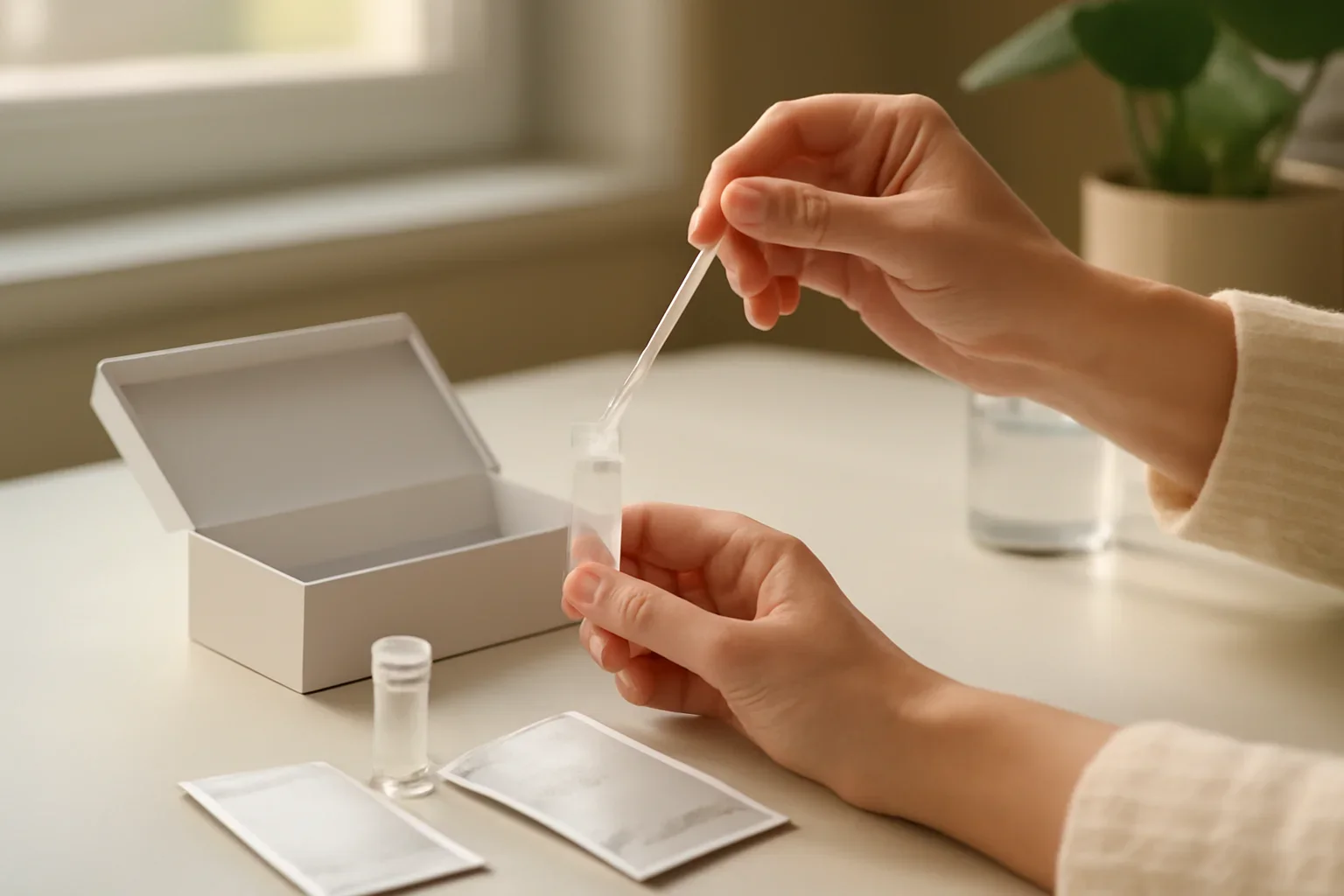
At-home microbiome test kit for a Canadian researching diarrhea-related questions
Start with the reason you are here

Should you be thinking about a microbiome test—or clinical care?

These situations are not equivalent. A consumer microbiome test is an educational product, while active or concerning diarrhoea can require clinical assessment.

01

You have active or concerning symptoms

If diarrhoea is persistent, worsening, associated with blood, significant dehydration, high fever or another concerning change, prioritise appropriate healthcare assessment rather than waiting for a consumer microbiome report.

02

You want to know what caused the diarrhoea

This is also a clinical question. A standard consumer microbiome profile is not the same as diagnostic stool testing for an infectious, inflammatory or other medical cause of diarrhoea.

03

You want an educational microbiome snapshot

Testing may fit if your goal is to review bacterial composition, relative abundance, diversity or other report information and you understand that the result will not diagnose the symptom.

Microbiome stool collection kit and educational testing instructions
The sample reflects its collection context

Why diarrhoea matters when you interpret a microbiome sample

Stool consistency and intestinal transit are associated with measurable differences in faecal microbiome composition and diversity. That means the physical state of a stool sample is relevant context when interpreting microbiome findings.

If a sample is collected during a period of diarrhoea, it should be understood as a snapshot from that period—not automatically as your usual microbiome, a permanent baseline or proof of what caused the symptom.

  • check_circle Stool consistency has been associated with major microbiome measures including richness and community composition.
  • check_circle Faster intestinal transit can influence the environment represented by a faecal sample.
  • check_circle A difference observed during diarrhoea does not by itself establish whether the microbiome change caused the symptom or resulted from it.
  • check_circle One sample cannot establish your usual long-term microbial pattern.

Practical interpretation: the question is not whether diarrhoea makes microbiome data automatically “bad.” The question is what that particular sample represents and whether the conclusion you want to draw is actually supported.

Do not confuse two types of stool testing

What question are you trying to answer?

A consumer microbiome profile and clinician-selected diagnostic stool testing have different purposes. Knowing the difference prevents a microbiome report from being used as a substitute for medical assessment.

Your question Consumer microbiome report What it does not establish
“What bacterial groups are represented in this sample?” The report may organise detected bacterial groups and related composition information within its testing scope. A complete inventory of every microorganism in your gastrointestinal tract.
“What is causing my diarrhoea?” The report may provide microbiome-related information for education. Whether the symptom is caused by infection, medication, inflammation, food-related factors or another medical condition.
“Do I have an intestinal infection?” A general consumer microbiome profile is not a substitute for clinician-directed testing for suspected infection. Diagnosis or exclusion of an infectious cause of diarrhoea.
“Is this bacterium making me sick?” The report may show that a bacterial group was detected within the analytical framework. That detection proves the organism is causing your symptom.
“What treatment should I take?” Educational food or lifestyle information may be included in the report framework. A prescription, medication decision or individual treatment plan.
Keep useful context with your sample

Four details worth remembering around collection

These details do not diagnose anything. They simply help prevent a microbiome snapshot from being interpreted without the circumstances in which it was collected.

event

Symptom timing

Keep a simple note of whether the sample was collected during active diarrhoea, after symptoms changed, or during your usual bowel pattern.

medication

Recent medication context

Medication history can matter when interpreting digestive questions. Never stop or change prescribed medication simply to alter a consumer microbiome result.

flight

Travel or unusual exposure

If symptoms occurred around travel or another unusual event, that context may be clinically relevant. A consumer microbiome profile cannot replace appropriate diagnostic assessment.

restaurant

Major routine changes

Significant changes in food intake or everyday routine can be useful background when looking back at the timing of a microbiome snapshot.

Collection instructions come first: do not assume that every diarrheal sample is automatically suitable for every kit. Follow the specific collection, sample-suitability, packaging and return instructions supplied with your test, and ask support when a kit-specific instruction is unclear.

Set the right expectation

What the report may show—and what diarrhoea does not turn it into

The current report framework is educational. Having digestive symptoms does not change a consumer microbiome profile into a medical diagnostic test.

The report may include

  • check_circle Bacterial composition information from the submitted stool sample.
  • check_circle Relative abundance of bacterial groups represented in the report.
  • check_circle Species-richness or microbiome-diversity information where included.
  • check_circle Educational nutrition, food or lifestyle information when included.

The report does not establish

  • block The medical cause of diarrhoea.
  • block Whether an infection is present or has cleared.
  • block That one bacterial percentage explains your symptoms.
  • block A medication, supplement, restrictive diet or treatment prescription.
If educational testing still fits your goal

Six checks to make before ordering

Judge the product by its sample requirements, report, process and limitations rather than by a promise to explain diarrhoea.

fact_check

Check your expectation one last time

If you are purchasing because you expect the report to identify the cause of active diarrhoea, the test does not match that goal. Consumer testing should remain educational rather than diagnostic.

Canadian practicalities

Know what happens after you decide to test

Laboratory processing is only one part of the total timeline. Delivery, collection and return transit occur before the current laboratory turnaround begins.

home_health
At home

Stool sample collection

The current consumer workflow uses a stool sample collected with the materials and instructions supplied with the kit. Sample suitability and correct packaging matter before processing can begin.

biotech
Bacterial DNA

Laboratory analysis

Current process documentation describes bacterial-DNA analysis used to estimate reported bacterial composition and relative abundance before data processing, quality review and report preparation.

schedule
15–20 working days

Indicative laboratory turnaround

The current estimate begins after an acceptable returned sample reaches the laboratory and is accepted for processing. Delivery and return transit are separate, and operational issues can extend the full timeline.

medical_services

When diarrhoea belongs in the clinical lane

A consumer microbiome report should not delay appropriate medical assessment. Canadian public-health guidance advises seeking healthcare when diarrhoea is persistent or accompanied by concerning features such as blood in the stool, high fever or signs of dehydration.

Clinical assessment is also the correct route when your main question is whether an infection is present, whether medication is causing symptoms, or whether another gastrointestinal condition needs to be investigated.

Customer support can explain practical questions about the kit, sample return, order status, privacy or report access. It should not be used as a substitute for diagnosis, treatment or symptom assessment.

Evidence and editorial review

How this diarrhoea testing guide was checked

This page separates a commercial microbiome profile from clinical evaluation of diarrhoea and gives stool consistency and transit appropriate context when discussing microbiome measurements.

Page review record

Written by: [Author Name, Role]

Reviewed by: [Reviewer Name, Relevant Professional Credentials]

Last reviewed: August 19, 2026

Review focus: diarrhoea-specific clinical boundaries, stool consistency and microbiome interpretation, current testing workflow, report limitations, Canadian health context and privacy.

Replace the placeholders above with real names and verified credentials before publication. Do not imply physician or other clinical review unless an appropriately qualified person has actually reviewed the final page.

Sources reviewed

Vandeputte D, et al. Gut. 2016.

Population research demonstrating a strong association between stool consistency and major measures of faecal gut microbiota composition.

Review the PubMed record

Procházková N, et al. Gut. 2023.

Review of evidence showing that intestinal transit time is an important factor shaping gut microbiota composition and activity.

Review the research

Porcari S, et al. Lancet Gastroenterology & Hepatology. 2025.

International consensus addressing appropriate microbiome testing, reporting requirements, interpretation and current evidence gaps in clinical use.

Review the PubMed record

HealthLink BC: Diarrhea, Age 12 and Older.

Provincial consumer-health guidance used to support the clinical-care boundary and the need to respond appropriately when diarrhoea is persistent or accompanied by concerning symptoms.

Review HealthLink BC guidance
Before you decide

Microbiome test for diarrhea FAQs

Direct answers about symptoms, stool consistency, report limitations and the difference between consumer microbiome profiling and clinical testing.

Can a microbiome test tell me what is causing my diarrhea? expand_more

No. A consumer microbiome report may describe bacterial composition, relative abundance, diversity or related findings from a stool sample, but it cannot determine the medical cause of diarrhea. Infection, medication effects, gastrointestinal conditions and other causes require appropriate clinical assessment when diagnosis is needed.

Does having diarrhea affect a microbiome test result? expand_more

Stool consistency and gut transit are associated with measurable differences in faecal microbiome composition. A sample collected during diarrhea therefore reflects that collection period. This does not make the result automatically invalid, but it means the report should not automatically be treated as your usual long-term microbiome baseline.

Can a consumer microbiome test detect an intestinal infection? expand_more

Do not use a general consumer microbiome profile to diagnose or rule out an intestinal infection. Diagnostic testing for suspected infection has a different clinical purpose and should be selected by an appropriate healthcare professional based on symptoms, history and other relevant information.

Should I collect my microbiome sample while I have diarrhea? expand_more

Follow the instructions supplied with the specific kit rather than relying on a general rule from this page. If the sample-suitability instructions are unclear for your current stool consistency, contact customer support before collection. If your concern is the diarrhea itself, seek appropriate clinical guidance instead of relying on the report.

Can the report tell me which food or supplement will stop diarrhea? expand_more

No. Educational food or lifestyle information may appear in a microbiome report, but it should not be treated as an individual treatment prescription. A bacterial pattern does not prove which food, supplement or medication will resolve diarrhea, and medical or dietary treatment decisions require appropriate professional context.

When should I seek healthcare rather than wait for a microbiome report? expand_more

Seek appropriate healthcare when diarrhea is persistent, worsening, or accompanied by concerning features such as blood in the stool, high fever or signs of dehydration. A consumer report takes time to process and should never be used to delay medical assessment when symptoms themselves need attention.

Choose the test only if the question fits

If you want an educational microbiome snapshot and understand that it will not diagnose diarrhoea, review the current testing options. If you need to know why diarrhoea is happening or whether treatment is required, use the appropriate healthcare pathway instead.

fact_check Check Before Ordering