Privacy Questions to Ask Before Ordering a Microbiome Test in Canada
Before mailing a biological sample, look beyond the checkout page. A strong privacy review should tell you what personal information is collected, how the sample and test data are handled, which service providers are involved, where information may be processed, how long it is retained, and what choices you have later.
Before ordering, read the company's privacy and data pages and make sure you can answer four basic questions: what is collected, why it is needed, who it is shared with, and how long it is kept. For a microbiome service, ask those questions separately for your physical sample, account information, laboratory data and final report.
What privacy information can be involved in microbiome testing?
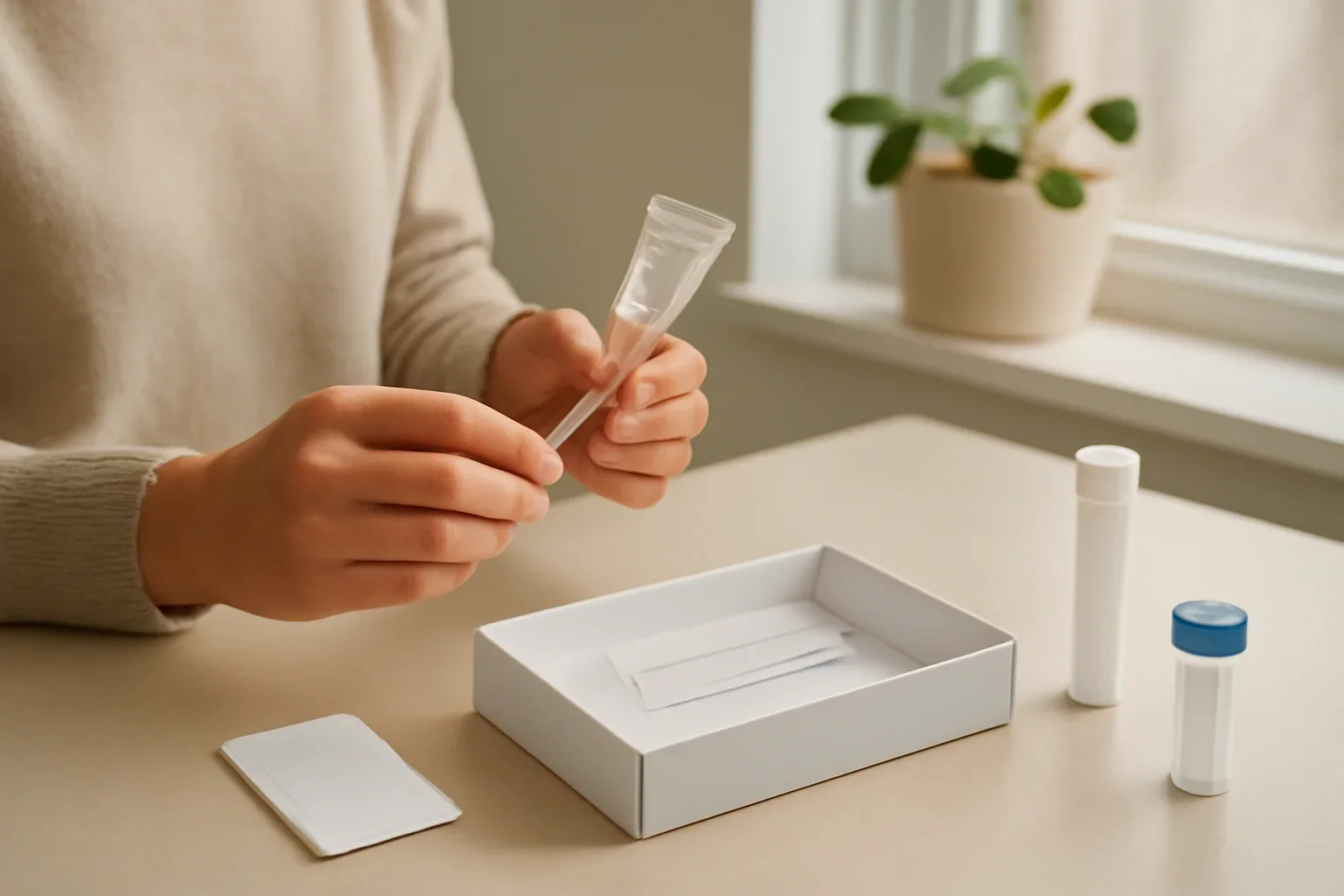
An at-home test creates several types of information at different stages. Understanding those categories makes a privacy policy easier to evaluate because “your data” is not necessarily one single file.
Identity and order information
This can include the information needed to create an account, process an order, provide support and arrange delivery or returns.
The physical sample
Ask how your collected sample is labelled, transported, processed, stored and ultimately destroyed after laboratory work is complete.
Laboratory and derived data
Laboratory processing can create digital data and analytical outputs separate from the physical sample. Ask which of those files are retained after your report is produced.
Your report and account history
The report you see in an account or receive electronically may follow a different retention schedule from the physical specimen or laboratory data.
Useful distinction: deleting an online account, deleting a report, destroying a remaining physical sample and deleting underlying laboratory data are different actions. A good privacy explanation should make those differences clear.
12 privacy questions to ask before ordering a microbiome test
You should not need a law degree to understand the answers. Canadian federal privacy guidance emphasizes clear information about what is collected, with whom it is shared, why it is used, and the meaningful risks or consequences.
Exactly what personal information is collected?
Look for a concrete list rather than a vague phrase such as “information you provide.” Ask whether collection includes account details, questionnaire answers, order/support records, sample identifiers, laboratory data and report information.
What does the laboratory process and retain?
Ask what the test is designed to analyze and whether the laboratory processes, filters, discards or retains any information beyond the microbial measurements required for the report. The answer should match the actual laboratory method.
Who receives my sample or data?
Separate the testing company from its service providers. Relevant parties can include a laboratory, shipping provider, cloud or software provider, payment processor and customer-support platform.
Where is my information stored or processed?
A Canadian-facing service can still use service providers in another province or country. Ask where laboratory processing and digital storage occur and whether personal information can cross provincial or national borders.
Why is each category of information needed?
The purpose should be specific enough to understand. “To provide the service” may cover core testing, but research, product development, analytics or marketing are separate purposes worth identifying clearly.
Is optional research or product-development use separate?
Ask whether participation in research, aggregated analyses, model development or other secondary uses is required for the test or offered as a separate choice. Canadian consent guidance stresses meaningful choice for non-essential uses.
How long is the physical sample kept?
Look for a sample-retention period or a clear destruction trigger. Do not assume the sample is destroyed immediately after testing unless the company actually says so.
How long are raw, derived and report data kept?
Ask separately about laboratory files, derived microbiome measurements, account information and the report. Digital data may have a different retention period from the physical specimen.
What can I request to access, correct or delete?
Find the actual process: who to contact, what identity verification is required, what information can be accessed or corrected, what can be deleted, and what may need to be retained for legal or legitimate business reasons.
Can I withdraw consent later?
Ask which consent choices can be changed after ordering and what happens if you withdraw them. Under PIPEDA guidance, withdrawal can be subject to legal or contractual restrictions and reasonable notice.
What security safeguards protect sensitive information?
A useful answer should go beyond “we take security seriously.” Look for clear descriptions of access controls, encryption or other technical safeguards, organizational controls and how service providers are managed.
What happens if there is a privacy breach?
Ask how incidents are assessed, when affected customers are notified, and which privacy regulator applies. Under PIPEDA, qualifying breaches that create a real risk of significant harm trigger reporting and notification obligations.
Privacy does not stop when the laboratory produces your report
The easiest way to read a microbiome privacy policy is to follow the sample and data from beginning to end. This prevents a common mistake: focusing only on how results are delivered while overlooking what happens before and after reporting.
- shopping_cart Order: account, transaction, shipping and support information are created.
- inventory_2 Collection: the biological sample is linked to a kit or sample identifier.
- science Laboratory: the sample is processed and laboratory data are generated.
- analytics Analysis: laboratory outputs are converted into reported measurements and educational context.
- description Report: results are displayed or delivered to the customer.
- delete Retention/destruction: different sample and data categories may be kept, anonymized or destroyed on different schedules.

Which privacy law may apply to a microbiome company in Canada?
The answer can depend on where the organization operates, the nature of the transaction and whether personal information moves across provincial or national borders. This section is general consumer context, not legal advice.
PIPEDA
PIPEDA sets federal private-sector rules for personal information used in commercial activities. It also applies to commercial personal-information flows that cross provincial or national borders.
BC PIPA
British Columbia's Personal Information Protection Act regulates many private organizations that collect, use or disclose personal information in the province. Individuals have access rights and organizations must protect the information.
Alberta PIPA
Alberta's Personal Information Protection Act governs many private-sector organizations and includes rules for consent, reasonable collection, safeguards, access/correction, retention and destruction or anonymization.
Private-sector privacy law
Quebec's Act respecting the protection of personal information in the private sector governs the lifecycle of personal information, including collection, use, disclosure, security, access, correction and destruction.
Cross-border point: even in British Columbia, Alberta and Quebec—where substantially similar provincial private-sector laws operate—PIPEDA can still apply to commercial transactions involving personal information transferred across provincial or national borders.
A Canadian website does not automatically mean all data stays in Canada
Privacy review should follow the actual processing chain. A service may use a laboratory, cloud provider or other processor located in another province or country. Under PIPEDA guidance, cross-border processing is not automatically prohibited, but the organization remains accountable for protecting personal information transferred to processors and should be transparent about foreign processing.
For a customer, the practical question is simple: where will my sample and digital information actually go?
Trace these four destinations
Ask “how long?” separately for the sample, raw data and report
Canadian privacy principles generally favour keeping personal information only as long as needed for identified purposes, subject to legal and legitimate retention requirements. That still leaves an important consumer question: what retention schedule has this particular company adopted?
Look for concrete retention answers
- check_circle How long is any remaining physical sample stored?
- check_circle How long are laboratory files or raw analytical data retained?
- check_circle How long are derived results and account records available?
- check_circle Are backups deleted on the same schedule or on a delayed cycle?
- check_circle What information must be retained for tax, fraud, legal or regulatory reasons?
Do not assume these actions are equivalent
- block Closing an account does not necessarily mean all laboratory data are deleted immediately.
- block Destroying a physical specimen does not automatically delete the digital data already generated from it.
- block Removing identifiers is not automatically the same as irreversible anonymization.
- block Withdrawing consent may not erase information that must lawfully be retained.
Quebec's private-sector privacy guidance, for example, states that personal information should be securely destroyed when the purpose for which it was collected is completed, subject to legal retention requirements; where anonymization is used instead, it must be designed so re-identification is no longer reasonably foreseeable.
“We use industry-standard security” is not the end of the conversation
PIPEDA requires safeguards appropriate to the sensitivity of the information. A customer does not need the company's complete security architecture, but the privacy information should be specific enough to show that sensitive data is treated accordingly.
Technical safeguards
Ask whether information is protected during transmission and storage, whether accounts support appropriate authentication controls, and how security updates or vulnerabilities are managed.
Access controls
Ask whether employee and service-provider access is limited to people who need the information for their role. Canadian privacy guidance emphasizes limiting access and protecting sensitive information against unauthorized use or disclosure.
Breach response
Look for a process for detecting, assessing and responding to security incidents, including how customers would be notified when applicable privacy-law thresholds are met.
A five-minute privacy check can prevent a much harder decision later
You do not need to audit every legal clause. Focus on whether the service answers the questions that affect your own comfort level before a sample exists.
If the privacy policy is unclear about a material point—such as research use, cross-border processing or sample retention—ask support before ordering and keep the response with your purchase records.
Pre-order privacy checklist
If you cannot answer several of these points from the company's public materials, that is useful information to discover before you mail a sample.
Related microbiome testing and privacy pages
These pages answer the next questions without repeating the privacy-checklist purpose of this article.
Privacy & Data
Review the site's current explanation of how privacy and data handling apply to microbiome testing and customer information.
Review privacy & data arrow_forwardPrivacy Policy
Read the formal privacy policy for current collection, use, disclosure and contact information relevant to the website and service.
Read the policy arrow_forwardGut Microbiome Test Canada
Review what the test is designed to report, how at-home stool collection works and what to consider before ordering in Canada.
Explore the gut test arrow_forwardMicrobiome Testing for Beginners
Start with the testing workflow if you need to understand what happens from kit collection through laboratory analysis and reporting.
Read the beginner's guide arrow_forwardScience Behind Microbiome Testing
Review the scientific and laboratory context so your privacy questions match what the test actually measures and reports.
Review the science arrow_forwardSample Microbiome Report
Preview the final report format before ordering so you know what information will be created and returned to you.
Preview the report arrow_forwardAuthoritative sources used for this guide
This article summarizes general consumer-facing privacy principles using guidance from Canadian privacy regulators. It does not determine which law applies to a particular company or replace legal advice.
- Office of the Privacy Commissioner of Canada. PIPEDA requirements in brief. Covers the federal private-sector framework, provincial laws and cross-border commercial personal-information flows. Privacy Commissioner of Canada
- Office of the Privacy Commissioner of Canada. PIPEDA Fair Information Principle 3 — Consent. Explains meaningful consent, including clear information about what is collected, who receives it, purposes and meaningful risks. Consent guidance
- Office of the Privacy Commissioner of Canada. Limiting Use, Disclosure, and Retention. Explains purpose limitation, retention schedules and secure destruction or anonymization. Retention guidance
- Office of the Privacy Commissioner of Canada. Guidelines for processing personal data across borders. Explains accountability for third-party processing and transparency about foreign processing. Cross-border guidance
- Office of the Privacy Commissioner of Canada. PIPEDA Fair Information Principle 7 — Safeguards. Explains safeguards appropriate to the sensitivity of personal information. Safeguards guidance
- Office of the Information and Privacy Commissioner for British Columbia. Legislation — Personal Information Protection Act. BC OIPC
- Office of the Information and Privacy Commissioner of Alberta. Personal Information Protection Act (PIPA). Alberta OIPC
- Commission d'accès à l'information du Québec. Private organizations — scope and personal-information lifecycle. Commission d'accès à l'information
Microbiome test privacy in Canada: FAQs
Direct answers to common pre-purchase privacy questions about samples, data, storage, access and Canadian privacy rules.
Is microbiome test data considered personal information in Canada? expand_more
Under PIPEDA, personal information is information about an identifiable individual. Whether a specific microbiome data element is personal information depends on the context and whether it can be linked to an identifiable person. Account, order and linked test-result information should therefore be reviewed carefully as part of the company's privacy practices.
Does a Canadian microbiome company have to keep my data in Canada? expand_more
Not necessarily. PIPEDA does not generally prohibit processing personal information in another jurisdiction, but organizations remain accountable for personal information transferred to service providers and should be transparent about foreign processing and related risks.
Can I ask who my microbiome data is shared with? expand_more
Yes, this is an important pre-purchase question. Canadian meaningful-consent guidance says organizations should make clear with which parties personal information is shared. Under PIPEDA access principles, individuals can also generally ask how their personal information has been used and disclosed, subject to legal exceptions.
Can I ask a microbiome company to delete my sample and results? expand_more
You can ask what deletion and destruction options are available, but the answer may differ for a physical sample, laboratory data, account records, reports and legally required records. Check the company's stated retention schedule and request process rather than assuming account deletion erases everything immediately.
What is the difference between de-identified and anonymized data? expand_more
The terms are not interchangeable in every legal framework. For example, Quebec privacy guidance treats anonymization as a demanding standard intended to make it reasonably foreseeable that an individual can no longer be identified directly or indirectly. Ask the company which standard it uses and whether re-identification keys or linked records still exist.
What privacy laws apply in British Columbia, Alberta and Quebec? expand_more
British Columbia and Alberta each have a Personal Information Protection Act, while Quebec has its private-sector personal-information law. These laws are substantially similar to PIPEDA for many in-province activities. PIPEDA can still apply to commercial personal-information flows that cross provincial or national borders.
What should I do if the privacy policy does not answer my question? expand_more
Ask the company before ordering. A meaningful answer should identify the relevant practice, not merely repeat a generic security statement. If the question affects whether you are comfortable sending a biological sample, resolve it before collection rather than after the test has been processed.

Review the privacy details before you send a sample
Read the privacy and data information, preview what the report contains, and ask any unresolved sample-retention or data-handling questions before ordering. Privacy should be part of the test comparison—not something you discover afterward.